


Junctions Along the ADR Spectrum

Written by Michael Zeytoonian on November 22nd, 2008

As ADR practitioners get out and educate the public about the various alternative dispute resolution processes, we frequently hear some of the same questions asked. People want to know the differences between this approach and that one, between what I do and what other lawyers do, between facilitative and evaluative mediation styles.  In order to best help our clients, we need to be able to successfully and clearly answer their questions.

What’s the difference between arbitration and mediation?

What is the difference between mediation and collaborative law? What does a case evaluator do differently from a mediator?

Where does the word “ombuds” come from, and how is an ombuds different from a human resources person?

How is mediation used as part of the collaborative process different from mediation that takes place in litigation?

Is arbitration all that different from litigation?

If we as ADR practitioners educate the public about the tremendous untapped resources available to them within the ADR spectrum, and engage in ongoing discussion with our potential clients about the value of ADR and the differences between approaches, we will be more successful in educating end users and referral sources about our respective services.  And we will achieve greater buy-in and use of our ADR services by the public.

Click to continue »

Collaborative Law — A New Choice for Divorcing Families

Written by Paula Noe on November 19th, 2008

When a family is divorcing, they can choose to go the typical route–litigation–or an increasingly common alternative–mediation.  In addition to those more traditional choices, couples now have the option of what’s been come to be known as the “collaborative process.”

In the collaborative law model (also known as Collaborative Practice), each client hires a collaboratively-trained attorney.  Clients and their attorneys sit down together for four-way meetings structured with the goals of fair dealing and transparent negotiating. The parties and their attorneys articulate the underlying goals and interests of the divorcing parties and strive to reach those goals in order to create a fair and reasonable separation agreement.

There are several keys, in my view, to a successful collaborative law situation. Together, all of these requirements comprise the total “collaborative commitment.”

Click to continue »

Reporting on Palin: Negotiations in Political Theater

Written by Erin Ryan on November 8th, 2008

Ever since Sarah Palin’s selection as John McCain’s vice presidential running mate, the McCain campaign has engaged in a cut-throat, high-stakes negotiation with a uniquely hamstrung counterpart—the news media. Or at least, that’s how it would appear to a skilled negotiator, given the unmistakable hard bargaining tactics the campaign has regularly employed. Extreme demands, psychological warfare, bluffing, stonewalling—each day yields another expert recitation of classic bargaining tactics that you might expect to encounter while shopping for a used car, though not so much in an election that should epitomize our civic ideal of consensus-building in the marketplace of ideas. But here we-the-people are, stuck on the seamy sidelines of a used car lot, watching the campaign and the press throw down.

It’s not your standard wheeling and dealing, to be sure, but it’s a negotiation nonetheless. What are they bargaining over? Like all negotiations, it’s about what the parties want from one another. The press wants a good story, of course, within the bounds of maintaining public credibility. The campaign wants favorable press coverage for its candidates, hoping to generate public credibility of its own. So it has been since campaigning began. But in this election, the McCain campaign has perfected a slowly developing twist in the game, pursuing a new bargaining strategy with ruthless message discipline at the expense of credibility for all involved. The campaign would still like favorable press coverage for its vice presidential candidate, of course, but if it can’t have that, its secondary aspiration is to undercut the legitimacy of what unfavorable coverage it receives—and with it, the legitimacy of the news media in general. Since Palin’s debut, the campaign has chased this second goal with even greater vigor than the first, leaving us to wonder whether it is not the second-best thing at all, but what the campaign really wanted to begin with. (Witness the artistically orchestrated spectacle during the convention, in which the speakers rallied tens of thousands of delegates to boo the members of the media among them covering the event for the tens of millions of viewers watching it all happen on live TV.)

Click to continue »

Welcome

Written by Stephanie Singer on November 7th, 2008

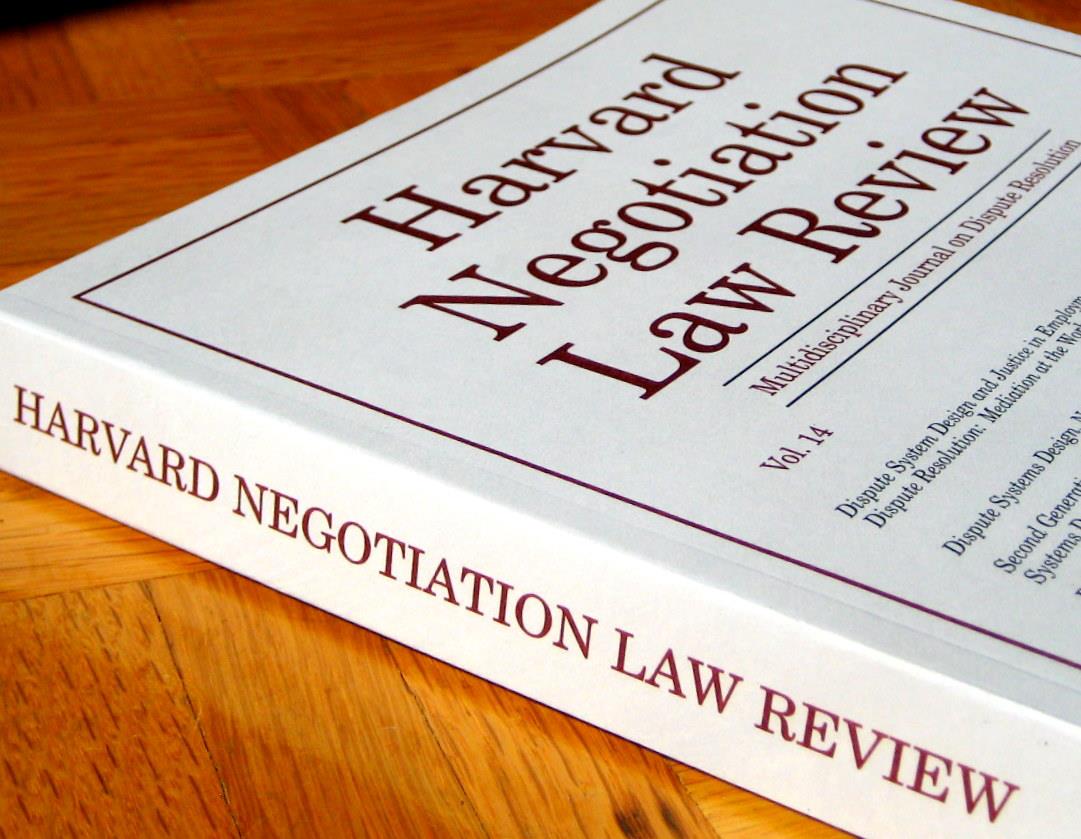
Welcome to the brand-new HNLR Online!  This online component of Harvard Negotiation Law Review will include interesting articles by professors, students, and practitioners of negotiation and alternative dispute resolution.  We plan to draw your attention to important developments in the world of negotiation/ADR and comment on the negotiation angle to current events.  We will publish cutting-edge articles about new negotiation/ADR trends and about innovative ways in which negotiation and ADR are being used to solve a variety of disputes.  Comments will be enabled on all blog postings, and we anticipate a lively discussion on the interaction of negotiation theory and practice.

If you are interested in submitting an article to HNLR Online, please email HNLR@law.harvard.edu.

  • Recent Articles
  • Recent Comments